Dealer & Distributor Management System (DMS) for Manufacturers: QR Tracking, Mobile App & Channel Sales Guide

Channel sales are the backbone of Indian manufacturing. From FMCG to paints, from hardware to automotive, every manufacturer relies on vast dealer and distributor networks to reach the market. These networks, however, are notoriously complex. Manufacturers must manage thousands of dealers, multiple layers of distributors, and even influencers like plumbers, carpenters, painters, and electricians who directly impact product recommendations.
Traditionally, these networks have been managed through spreadsheets, phone calls, and WhatsApp updates. While functional, these manual systems create inefficiencies, data blind spots, and lost opportunities. That’s where a Dealer & Distributor Management System (DMS) steps in. In 2025, adopting a DMS is no longer optional—it is a strategic necessity for manufacturers looking to grow, retain dealers, and build loyalty across their channel ecosystem.
In this detailed guide, we will explore what a DMS is, why it is crucial for Indian manufacturers, how features like QR tracking and dealer mobile apps are changing the game, and practical ways to implement DMS for industries ranging from wires and cables to FMCG and ceramics.
What is a Dealer & Distributor Management System?
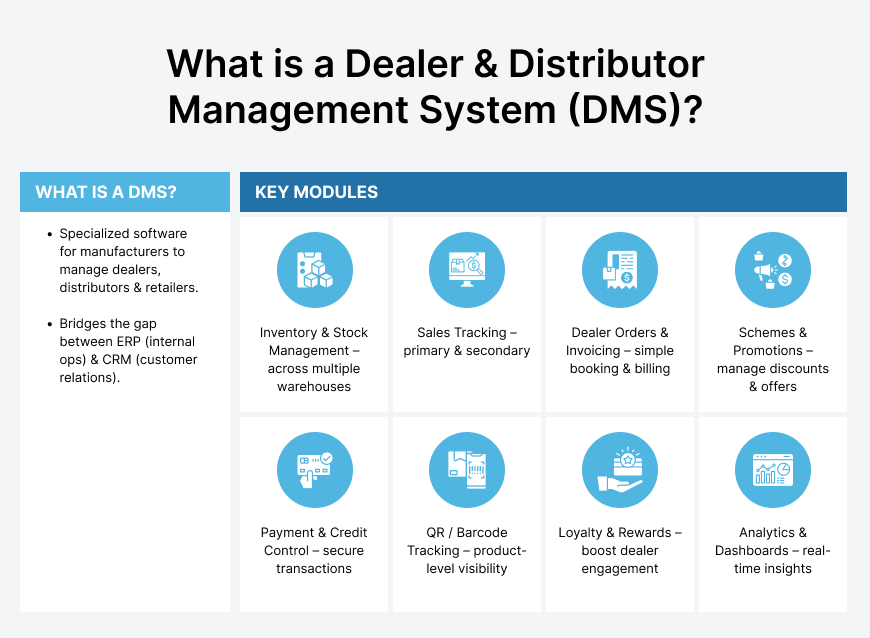
A Dealer & Distributor Management System (DMS) is specialized software designed to digitize and streamline the relationship between manufacturers and their extended channel partners. Unlike generic ERP or CRM systems, a DMS is tailored to address the unique complexities of dealer-distributor ecosystems. While ERP focuses on enterprise resource planning and CRM on customer relationship management, DMS sits in between—bridging the manufacturer with stockists, distributors, retailers, and influencers.
Key modules of a robust DMS include:
- Inventory and stock management across multiple warehouses.
- Primary and secondary sales tracking.
- Dealer order booking and invoicing.
- Scheme, discount, and promotion management.
- Payment and credit control.
- QR and barcode-based product tracking.
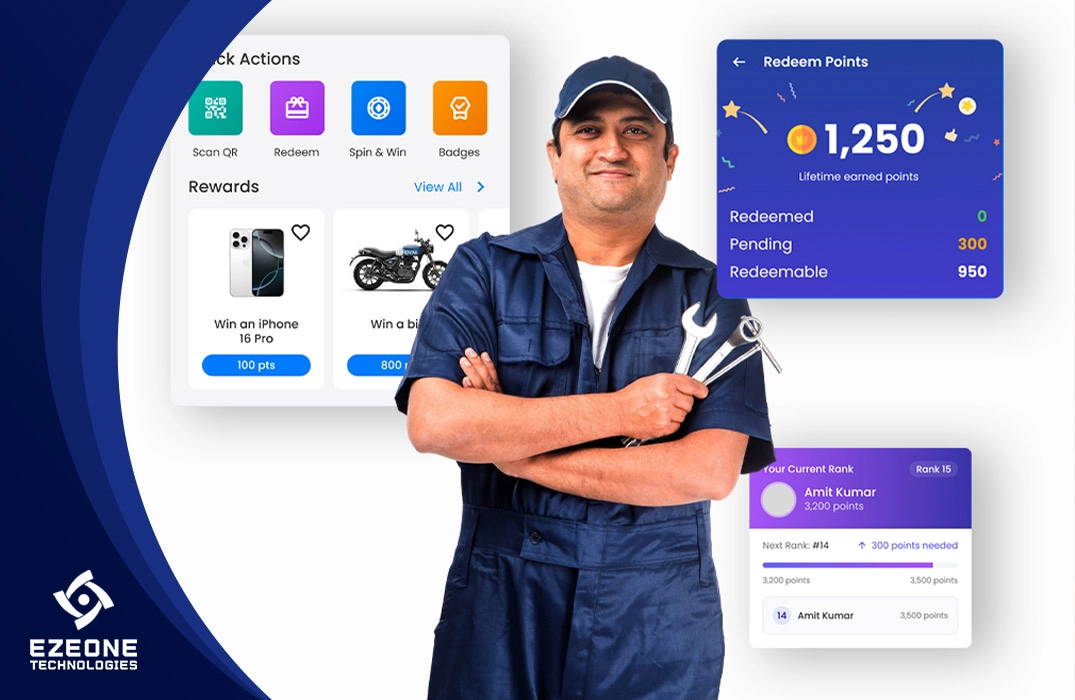
- Loyalty and rewards program integration.
- Analytics and reporting dashboards.
Modern DMS platforms are cloud-based, mobile-first, and integrate seamlessly with ERP and CRM, ensuring manufacturers achieve real-time visibility across their sales and distribution channels.
Why Indian Manufacturers Need DMS Today
India’s manufacturing supply chain is multilayered and highly fragmented. Manufacturers distribute products via super stockists, distributors, dealers, sub-dealers, and retailers, making visibility a constant challenge. Add to this seasonal fluctuations, regional variations, and rising competition, and the need for a systemized approach becomes urgent.
Without DMS, manufacturers often face:
- Delayed or inaccurate dealer data.
- Inability to track secondary sales.
- Fraudulent claims on schemes or promotions.
- Lack of real-time insights into product performance.
With DMS, these challenges are addressed head-on. Manufacturers gain complete visibility, faster claim settlements, and stronger dealer engagement—all of which directly contribute to higher market share and dealer loyalty.
Sales Route Planning for Indian Markets
Sales route planning, or beat planning, is critical in India where dealers are spread across diverse geographies, from metros to remote villages. Without automation, sales reps often miss key dealers, spend excessive time traveling, and fail to provide adequate coverage.
A DMS with beat planning ensures:
- Optimized travel routes for sales reps.
- Geo-tagged dealer visits.
- Attendance tracking with GPS.
- Dealer coverage analytics (frequency of visits, missed dealers, etc.).
This not only improves field efficiency but also builds stronger dealer relationships by ensuring consistent engagement.
Things to Consider Before Investing in a DMS
Before investing in a Dealer Management System, manufacturers must evaluate their unique needs. A one-size-fits-all approach rarely works. Instead, businesses should consider:
- Customization: Does the DMS cater to your industry (paints, hardware, FMCG, etc.)?
- Mobile-first approach: Can dealers and reps use it on smartphones with offline syncing?
- ERP/CRM/WMS integration: Does it connect seamlessly with existing tools like SAP, Tally, or Busy?
- Advanced analytics: Does it provide actionable insights beyond raw data?
- Security: Is the system cloud-based with enterprise-grade encryption?
- ROI: Does the cost align with measurable business benefits?
Evaluating these parameters ensures that the DMS investment drives sustainable results rather than becoming another underused software.
Practical Ways Dealer Management Software Improves Operations
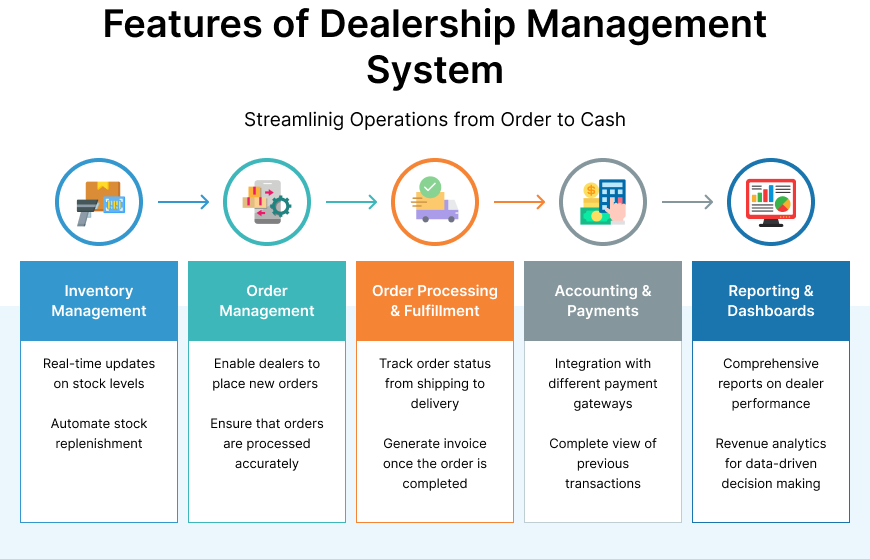
The power of a DMS lies in its practical impact on day-to-day operations. Some key improvements include:
- Real-time order booking: Dealers and sales reps place and track orders digitally.
- Scheme management: Promotions, discounts, and dealer-specific offers are automated.
- Payment tracking: Manufacturers gain visibility into pending payments and credit limits.
- Claim settlement: Digital workflows reduce disputes and delays.
- Loyalty integration: Dealers earn and redeem points for purchases or performance.
- Analytics: Real-time dashboards highlight top dealers, products, and regions.
By addressing these areas, manufacturers reduce leakages, improve transparency, and accelerate their order-to-cash cycles.
Dealer Mobile App: The Game-Changer
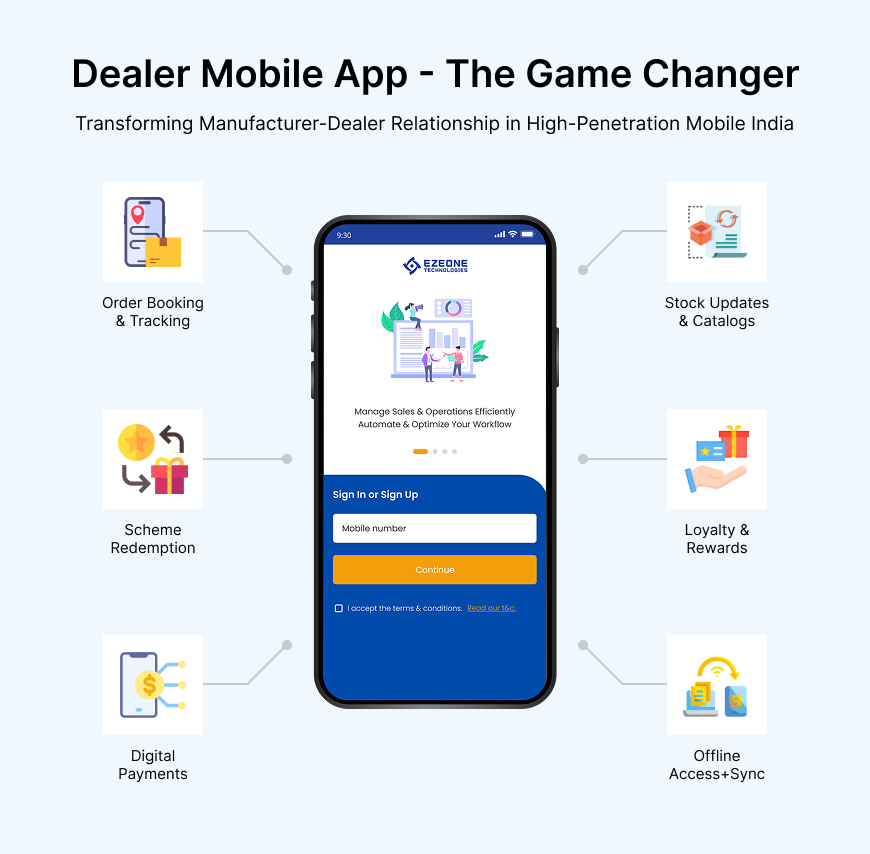
In India, where mobile penetration is high even in rural areas, dealer mobile apps are transforming manufacturer-dealer relationships. A dealer app provides self-service capabilities to channel partners, reducing dependency on manual communication.
Features of a dealer app include:
- Order booking and status tracking.
- Scheme visibility and redemption.
- Stock updates and product catalogs.
- Digital payment options.
- Loyalty and reward dashboards.
- Offline access with auto-sync when network returns.
For manufacturers, apps mean reduced operational overheads and improved dealer satisfaction. For dealers, it means faster access to business-critical information and services.
Dealer Management System and QR Code Tracking: A Perfect Match
QR code technology has revolutionized DMS by adding authenticity and visibility. By implementing QR-based tracking, manufacturers can:
- Authenticate products to prevent counterfeiting.
- Track products at batch or serial level.
- Link dealer purchases to loyalty programs.
- Simplify warranty registrations.
- Validate scheme claims with QR scans.
This ensures transparency and builds trust among dealers, distributors, and end customers, while giving manufacturers clean data for forecasting and planning.
Benefits of EzeOne’s Dealer Management System
EzeOne Technologies offers a robust Dealer Management System tailored for Indian manufacturers across multiple industries.
Key benefits include:
- Centralized dashboards for manufacturers and distributors.
- Customizable modules for industry-specific needs.
- Dealer and distributor mobile app with offline support.
- QR and barcode scanning integration.
- Seamless ERP/CRM integration (Tally, SAP, Busy).
- Real-time analytics and reporting.
By implementing EzeOne’s DMS, manufacturers achieve faster order processing, improved dealer loyalty, reduced fraudulent claims, and measurable ROI.
Industries Using DMS
Dealer Management Systems are not limited to one sector—they have applications across multiple industries:
- Wires & Cables: For stock tracking and counterfeit prevention.
- Plywood & Laminates: For dealer incentives and scheme tracking.
- Bath & Kitchen Fittings: For influencer loyalty and warranty management.
- Sanitaryware & Ceramics: For QR-based authenticity and dealer order tracking.
- Hardware & Fittings: For credit control and distributor performance.
- FMCG: For secondary sales tracking and scheme automation.
- Automotive & Components: For spares distribution and warranty validation.
- Paints & Adhesives: For scheme redemption and influencer engagement.
- Home Appliances: For warranty registration and dealer claims.
- Composite Panels & Building Materials: For project-level dealer incentives.
- Power Tools & Industrial Equipment: For dealer performance tracking.
This cross-industry relevance makes DMS one of the most versatile tools in the modern manufacturing tech stack.
Future of Dealer & Distributor Management Systems
As technology evolves, DMS is moving beyond automation to intelligence. Future-ready DMS platforms will feature:
- AI-driven forecasting for demand and dealer performance.
- IoT integration for live stock updates.
- Voice-enabled dealer order booking assistants.
- AR/VR-based product demos for distributors and influencers.
- Predictive analytics dashboards with proactive recommendations.
Manufacturers that adopt these trends early will enjoy faster growth, stronger dealer relationships, and higher market competitiveness.
Frequently Asked Questions (FAQs)
Q1: What is a Dealer Management System?
A: Its software designed to automate and digitize dealer-distributor operations, from orders to claims.
Q2: How is DMS different from CRM or ERP?
A: ERP focuses on enterprise resources, CRM on customers, while DMS bridges manufacturers with channel partners.
Q3: Which industries need DMS most?
A: FMCG, paints, hardware, sanitaryware, automotive, wires, and more.
Q4: Can DMS integrate with existing ERP?
A: Yes, modern DMS solutions integrate seamlessly with SAP, Tally, Busy, and others.
Q5: What ROI can manufacturers expect?
A: Faster order cycles, reduced fraud, stronger dealer loyalty, and better forecasting accuracy.
Conclusion
In today’s competitive manufacturing landscape, a Dealer & Distributor Management System is no longer a nice-to-have—it is mission-critical. Manufacturers that invest in a modern DMS not only gain operational efficiency but also build stronger relationships with dealers and distributors. By leveraging mobile apps, QR tracking, and real-time analytics, businesses unlock growth, transparency, and profitability.
👉 Book a Free Demo with EzeOne Technologies to discover how our DMS can transform your dealer and distributor management processes.